
How to Capture Attendee Attention at Your Event
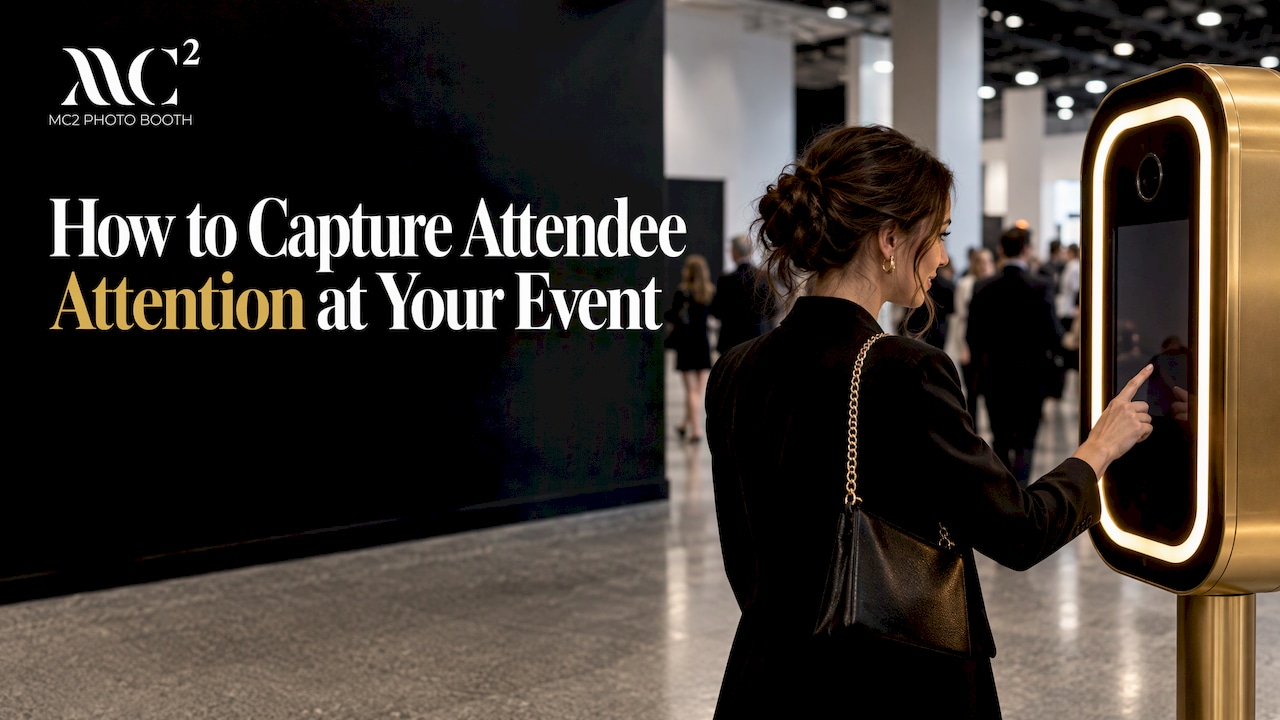
Attention at an event is earned in three moments: before guests arrive, in the first ten minutes, and at the point where a session or a booth visit would normally lose them. The most reliable way to win all three is to give people something to do, not only something to watch. A branded, hands-on experience such as a photo booth, an AI portrait station or a roaming photographer gives guests an easy first move, a reason to linger and something to carry out of the room. That is what we build at MC2 for corporate planners, trade show teams, universities and brand activations.
This guide covers the full arc: what to do before the event, how to open it, how to keep people engaged, and how to tell whether it worked.
Key Takeaways
Attention starts at registration. Targeted pre-event messages and a clear first move for arriving guests remove the “now what?” moment.
Interactive moments beat passive ones. People stay longer at stations where they take part, and a branded keepsake extends your reach after the event.
Match the format to the audience: lead capture for trade shows, shareable moments for brand activations, ambassador-friendly designs for campuses.
Measure while the event is live (visits, dwell time, participation) so you can adjust on the day, then follow up within 24 hours.
One partner can design, brand and run the experience end to end, so your team stays on the event itself.
Table of Contents
Why attention is hard to hold, and what actually works
Guests arrive with phones, a full inbox and a dozen other options for their time. Your agenda, signage and speakers all compete with that. The planners who hold attention tend to do the same three things: they prepare attendees, they remove friction at the start, and they replace some passive time with participation.
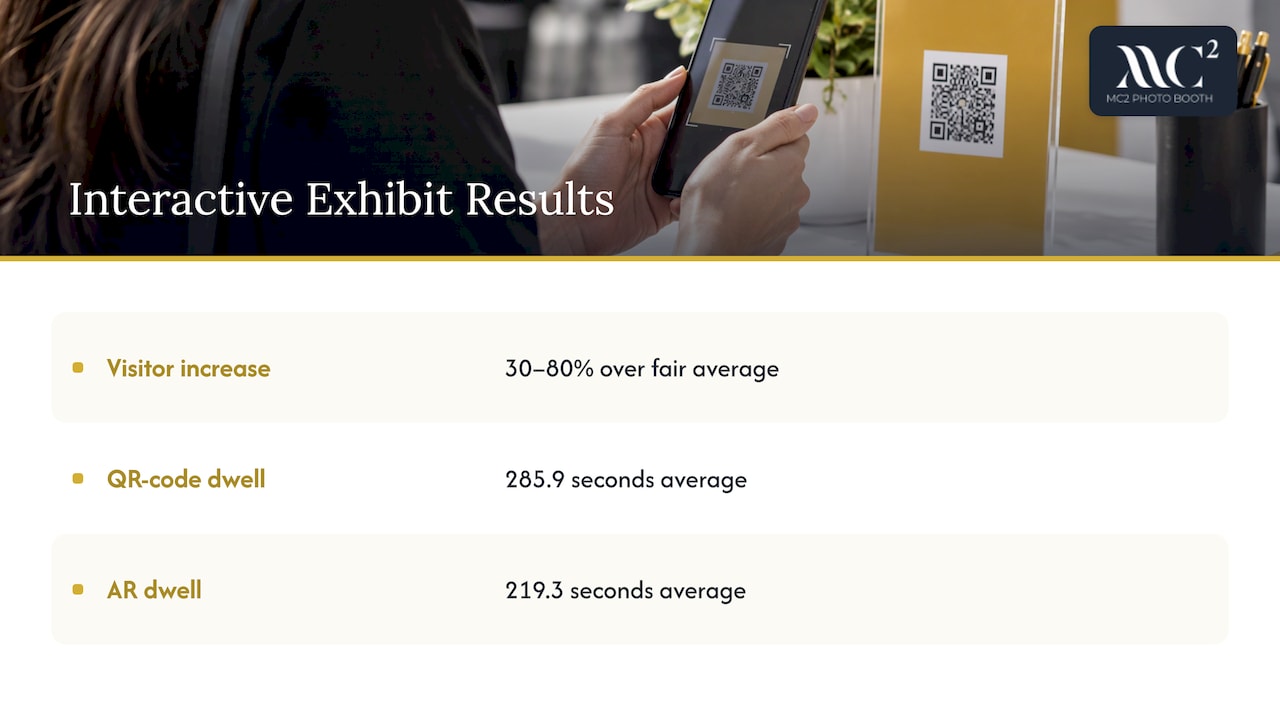
There is research behind the participation point. A peer-reviewed Scientific Reports study of digital exhibitions at three international fairs found that interactive digital exhibits drew 30 to 80% more visitors than the fairs’ average exhibitor-to-visitor ratios. In the same study, QR-code and AR modules held visitors for an average of 285.9 and 219.3 seconds. Exhibitors interviewed in it also reported that visitors who began with a product or tool presentation stayed significantly longer than those who began with text. The lesson for planners: a clear, hands-on invitation with a story behind it holds people longer than a sign.
The details differ by audience, so the sections below split the advice by moment, then by event type.
Before the event: give people a reason to show up ready
Attention you win before the event is attention you do not have to fight for on the day. Three habits are widely recommended by event-industry guides.
Ask at sign-up, then use the answers. EventsAir’s experiential events guide suggests collecting attendee goals, session preferences, networking intentions and accessibility needs at registration, then sending content that matches: speaker announcements, session previews, agenda reminders and countdowns.
Segment your emails. Ozum’s corporate event prep guide recommends journeys tailored to role, interest or ticket type, plus a short virtual kickoff that explains the event app and agenda so day one has less confusion.
Tease the experience itself. Cvent’s engagement guide lists teaser videos, countdown campaigns and polls of registrants about what they want to see. If your event includes a branded photo moment, an AI portrait station or a 360 video booth, show a preview in these emails. Guests who know there is something to try arrive curious, and they tell colleagues.
For universities, add one more layer: student ambassadors and creators. Event Marketer’s guide to campus experiential marketing calls ambassadors, creators and talent partnerships essential to campus campaigns. An activation that students want to be photographed at gives those ambassadors something concrete to post about before the day.
The first ten minutes: remove the “now what?” moment
The opening minutes decide whether guests settle in or drift to their phones. The Event Planner Expo’s first-10-minutes guide advises walking the arrival route yourself from parking to check-in, matching check-in capacity to your guest count, starting music before doors open, and giving guests an easy first move: a bar, a passed appetizer or an interactive installation.
That last item is where an experience pays for itself. Place it right after check-in, in sight of the line, and arriving guests have an obvious thing to do while the room fills. A few formats that work well at the entrance:
A roaming photographer. Instead of waiting for guests to find a station, the photographer meets them where they are. This suits receptions and networking hours where people are standing and moving. See our roaming photo booth.
A branded backdrop or step-and-repeat. Fast, familiar and effective for arrival photos, and it puts your logo in every picture. Our custom backdrops and branded prints are designed around your brand.
A headshot booth. For conferences and campus career events, professional headshots give people a tangible reason to come early.
We also keep a longer guide on how to engage conference attendees and one on conference icebreaker ideas if your opening hour is the main challenge.
Keeping attendees engaged through the middle
The middle of an event is where attention slips: back-to-back sessions, long lunches, an afternoon dip. Event guides converge on a handful of tactics.
Break up passive time. Cvent suggests replacing slide-heavy presentations with fireside chats and workshops, mixing seating styles, offering content tracks by interest, and gamifying participation with competitions and leaderboards. The Association for Meeting Industry’s 2026 guide to engaging formats catalogs structures such as buzz groups, roundtable rotations, fishbowl discussions and five-minute mini-lectures.
Give strangers a conversation starter. Hire Space’s event experience playbook describes a registration photo wall where attendees leave advice, and badges printed with a favorite song or hobby so people have something personal to open with. The principle is that a visible, personal object makes talking easier than a name tag alone.
Structure the networking. EventCreate recommends timed five-minute connection rounds with guided prompts after a keynote or over lunch, which helps first-timers and introverts.
Use a shared activity. A photo or video experience works as a networking device in its own right. People pose together, wait together and compare results. A 360 video booth turns a group of colleagues into a spectacle that draws a crowd, and every clip carries your branding when it is shared. A magazine cover booth lets guests star on a cover themed to your campaign or conference.
Match the experience to the event
Different events need different attention outcomes. Choosing the format by outcome keeps the activation from becoming decoration.
Event type | Attention goal | Formats we offer that fit |
Corporate conference or company event | Mixing, shared memories, brand pride | Roaming photography, magazine booth, custom backdrops, video booth |
Trade show | Booth traffic and lead capture | Custom trade show deployments with integrated lead capture, AI portraits, 360 video booth |
University or student event | Participation, social sharing, school spirit | Trading cards, 360 video booth, AI experiences, branded prints |
Brand activation | Shareable moments and brand recall | AI portraits, robotic sketch and AI draw bot, custom branded keepsakes |
Trade shows: turn foot traffic into conversations
On a crowded show floor, a booth has seconds to give a passer-by a reason to stop. Something people can see being made works as a magnet: a portrait appearing, a 360 clip playing back, a sketch being drawn. Once a visitor steps in, your team has a natural opening, and the interaction can capture contact details. Our custom trade show deployments integrate lead capture and are built around your booth’s branding and goals. For more concepts, see our trade show photo booth ideas.
Universities: make it something students want to post
Student audiences respond to novelty and to things that feel made for them. Personalized trading card prints, AI-generated portraits and 360 clips give students a keepsake or a clip that is worth sharing, and they work for orientation weeks, homecoming, career fairs and graduations. Our guides to AI photo booth ideas for events, trade shows and campuses and graduation photo booth ideas go deeper.
Brand activations: design the story first
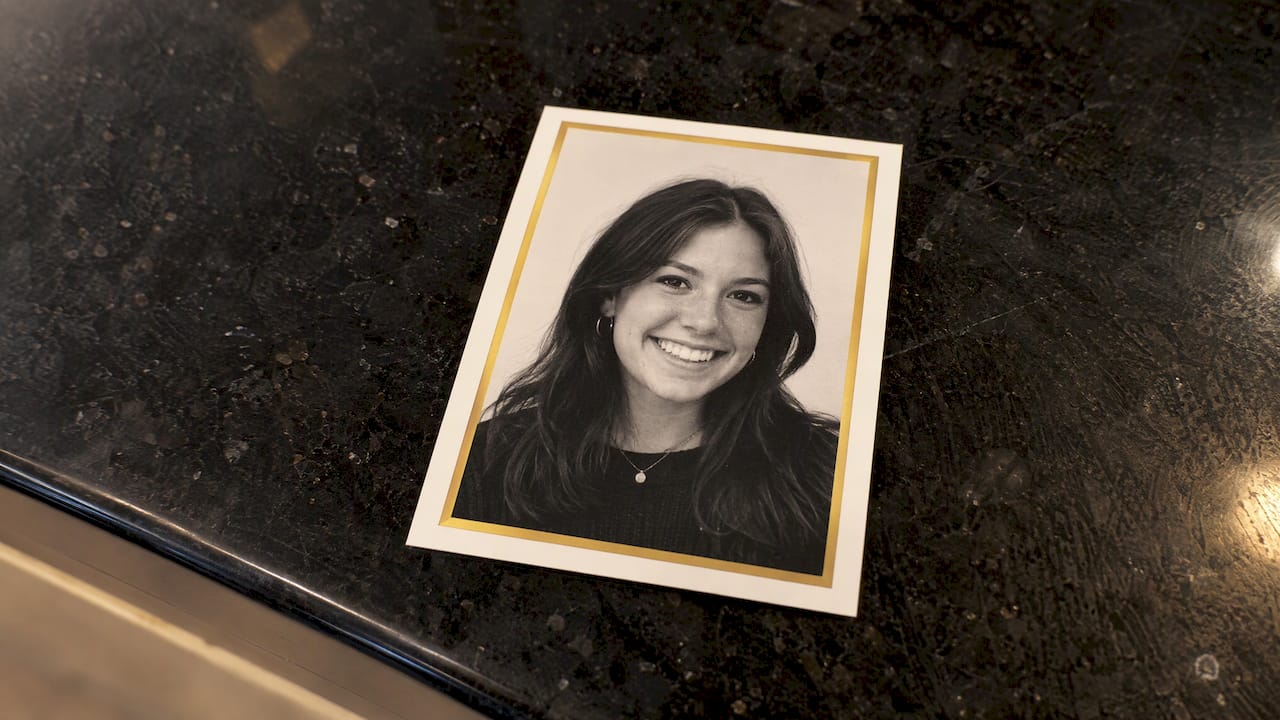
The Scientific Reports study’s finding on storytelling applies here. Decide what story the guest should walk away with, then pick the format that tells it. An AI portrait in your campaign’s visual style tells a different story than a vintage enclosed booth, and both can be right. If you are still choosing, our overview of types of photo booths compares formats.
Seasonal and year-end events
Holiday parties compete with a crowded calendar, so attendance and attention both need a hook. We cover planning in holiday party photo booth: how to plan one guests use and holiday photo booth experiences for corporate events.
A simple plan for a station that actually holds attention
Whatever format you pick, the same design choices decide whether guests use it.
Place it where traffic already flows. Near check-in, the bar or the main stage exit. A station tucked away in a corner gets only the guests who go looking.
Make the first step obvious. One sign, one action. If guests need a paragraph of instructions, the line will not form.
Brand the output, not just the booth. The backdrop, print border, video overlay or card design should carry your identity, because the output is what travels after the event.
Give it a role in the agenda. Announce it from the stage, include it in the pre-event email, and have a host or ambassador invite people in.
Plan the follow-up. Photos, clips or prints that guests receive are a natural reason to send the 24-hour thank-you message described below.
The design of the guest flow matters as much as the hardware. We shape the workflow around your brand and engagement goals, from concept through execution.
Measure attention while the event is live
Attention you cannot see, you cannot improve. EventsAir recommends tracking attendance, booth visits and engagement during the event so you can spot falling participation and adjust communications or programming while it is still happening. It also advises sending personalized thank-you emails within 24 hours that reference the sessions attendees joined or exhibitors they visited.
In practice, track a small set of numbers:
Participation count: how many guests used each experience, against total attendance.
Dwell time: how long people stayed at a station or booth. The academic study above reports dwell times in the minutes for the digital exhibits it measured, a useful reminder that time spent is a stronger signal than a headcount alone.
Leads captured: for trade shows, the contacts collected at your activation.
Shares: posts and clips guests publish, which show reach beyond the room.
Follow-up response: opens and replies to the next-day message.
Compare these to the goal you set before the event. A conference might aim for most attendees to take part in one shared experience, while a trade show might aim for a lead count per day.
Planning with MC2
We produce photo and video experiences for corporate events, trade shows, universities, weddings and brand activations. The range includes the headshot booth, roaming photography, magazine cover booth, 360 video booth, video booth, AI portraits and AI draw bot, scribble booth, custom trading cards, red carpet and step-and-repeat setups, and custom backdrops. We have completed over 300 projects, and we handle the work from concept to execution so the experience reflects your branding and audience goals. Pricing is quoted per event, so the quickest route is to browse the full list of experiences or look at our AI photo booth rental, then tell us your event type, headcount and goal.
Perspective
The most common mistake we see in attention planning is treating the photo or video experience as an add-on. When it is designed as part of the guest journey, it does three jobs at once: it gives arriving guests something to do, it gives groups a reason to talk, and it hands everyone a branded keepsake that keeps your event in front of them afterward. That is why we build around your brand and your goal, not around a fixed package. Branded backdrops, AI portraits, robotic sketching, trading cards and 360 video are tools. The question we start with is what you want a guest to feel, do and share, and what your team needs to capture, whether that is leads at a trade show or school spirit on campus. Our approach is end-to-end: concept, design, branded customization, and on-site execution. That lets you spend the event talking to your guests instead of managing equipment. Marvin
FAQ
How do I get attendees to pay attention at the start of an event?
Give them an easy first move. Walk the arrival route yourself, keep check-in fast, start music before doors open, and place an interactive installation, a bar or a passed appetizer near the entrance. A photo or video experience beside check-in fills the waiting time and sets the tone.
What keeps event attendees engaged through long agendas?
Alternate passive and active formats. Replace some presentations with workshops or fireside chats, add timed networking rounds, and schedule hands-on stations between sessions. Guests return to an agenda more focused after a break in which they took part in something.
What works best for capturing attention at a trade show?
A visible, hands-on experience at the front of your booth that gives passers-by a reason to stop and gives your team a natural way to start a conversation. Our custom trade show deployments include integrated lead capture, so the interaction becomes a contact you can follow up on.
How do I know if my engagement efforts worked?
Set targets before the event for participation, dwell time, leads and shares, then watch them live so you can adjust the same day. Afterward, send a personalized thank-you within 24 hours that references what each guest attended or visited.
Which experience suits a university event?
Formats that students want to share work best: personalized trading cards, AI portraits and 360 video clips. Pair them with student ambassadors who invite peers in, and brand the output with your school’s identity.
Sources
How to Design Experiential Events for Stronger Engagement, EventsAir
Engage Before the Event: Prep Tips for Corporate Event Planners, Ozum
10 Ways to Nail the First 10 Minutes of an Event, The Event Planner Expo
Engaging formats, methods and tactics, Association for Meeting Industry
21 Event Engagement Ideas to Keep Attendees Hooked, EventCreate
AR/VR based digital exhibitions as a tool for successful events, Scientific Reports
The Complete Guide to College Campus Experiential Marketing, Event Marketer
Recommended

Comments